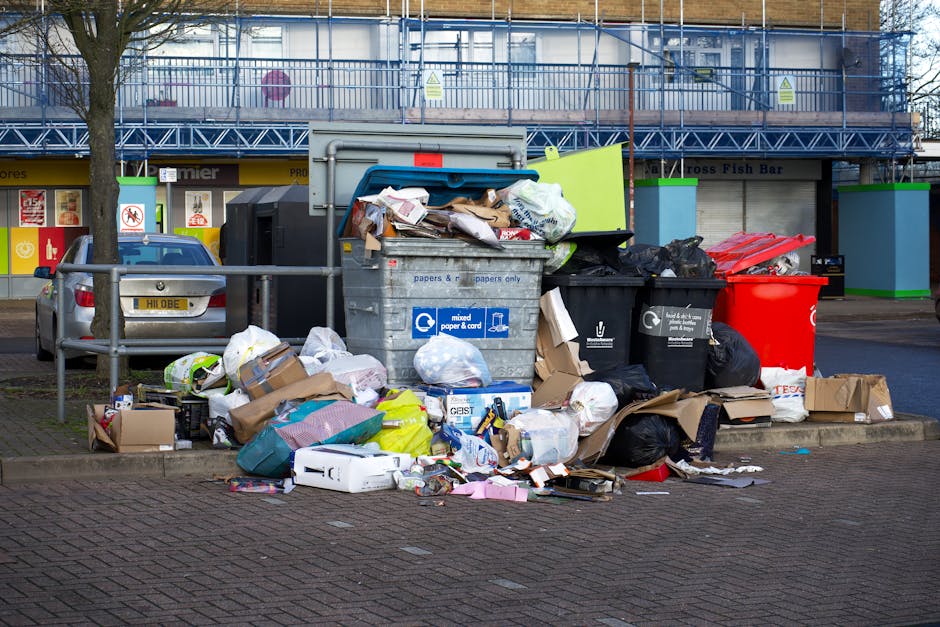
Commercial rubbish contracts for Westminster businesses
If you run a business in Westminster, rubbish has a habit of arriving quietly and then taking over. One week it is a few cardboard boxes and some office packaging; the next it is broken furniture, old fixtures, mixed general waste, and a corner of the premises that nobody wants to look at too closely. That is where commercial rubbish contracts for Westminster businesses become useful. They are not just about clearing waste. They are about keeping operations smooth, helping you stay organised, and avoiding those awkward moments when waste starts interfering with staff, customers, or compliance.
In plain English, a good commercial waste arrangement should fit the way your business actually works. A busy office in the middle of town will need something different from a cafe, a contractor, a landlord, or a small retail unit. Westminster also brings its own rhythm: tight access, busy streets, limited storage, and very little tolerance for waste hanging around longer than it should. Let's face it, nobody wants bin bags stacked by the back door because the collection schedule did not match reality.
This guide walks through how commercial rubbish contracts work, who they suit, what to watch for, and how to make a sensible choice without overcomplicating things. If you are also sorting out office space, it can be helpful to understand related services such as office clearance and broader business waste removal, because the right contract often sits alongside a one-off clearance plan.
Contents
- Why Commercial rubbish contracts for Westminster businesses Matters
- How Commercial rubbish contracts for Westminster businesses Works
- Key Benefits and Practical Advantages
- Who This Is For and When It Makes Sense
- Step-by-Step Guidance
- Expert Tips for Better Results
- Common Mistakes to Avoid
- Tools, Resources and Recommendations
- Law, Compliance, Standards, or Best Practice
- Options, Methods, or Comparison Table
- Case Study or Real-World Example
- Practical Checklist
- Conclusion
- Frequently Asked Questions
Why Commercial rubbish contracts for Westminster businesses Matters
A waste contract sounds mundane until it goes wrong. Then it becomes very noticeable, very quickly. Overflowing bins, missed pickups, mixed waste piling up in storage rooms, and staff spending time managing rubbish instead of serving customers or doing paid work all create friction. In Westminster, where properties are often compact and access can be awkward, poor waste handling becomes more than an inconvenience. It can affect hygiene, appearance, workflow, and even how your premises feel to visitors.
Commercial rubbish contracts matter because they create a predictable system. You know who is collecting what, how often, and under what terms. That predictability helps businesses plan around peak days, deliveries, refurbishments, and staff patterns. It also reduces the "we'll deal with it later" drift that tends to happen when everyone is busy. Truth be told, rubbish is easiest to manage when it has a home, a schedule, and somebody responsible for it.
For Westminster businesses, the location itself adds pressure. Many premises have shared access, time restrictions, limited loading space, or neighbours very close by. A contract that works on paper but fails in the real world is not much use. The best arrangements are practical, quiet, and flexible enough to deal with ordinary trade waste as well as the odd surge of bulky items. If your business also produces packaging, old desks, or broken shelving, it may be worth considering whether a contract should sit alongside a targeted waste removal service for heavier or mixed loads.
Expert summary: The best commercial rubbish contract is rarely the cheapest on paper. It is the one that fits your volume, access, timings, and duty of care needs without causing daily friction.
How Commercial rubbish contracts for Westminster businesses Works
Most commercial rubbish contracts follow a straightforward pattern: a provider assesses the waste stream, agrees the collection method, sets the schedule, and defines what is included. Simple enough, but the details matter. A contract may cover general trade waste, mixed recyclables, office furniture, or periodic clearances. Some businesses need a weekly rhythm. Others need flexible call-outs. A few need both. There is no single model that suits everyone.
Typically, the process starts with a conversation about what you throw away, how often, and where the waste is stored. That might sound obvious, but it is the bit that prevents headaches later. A cafe with food waste, cardboard, and general rubbish has different needs from a small law office with packaging and paper waste. A building contractor generating offcuts and renovation debris may need something closer to a scheduled clearance plan, possibly tied into builders waste clearance if the site turns over material quickly.
Once the scope is clear, the provider usually agrees:
- the type of waste covered
- how collections are arranged
- whether bins, sacks, or containers are used
- what happens when volumes rise unexpectedly
- how charges are structured
- what is excluded from the contract
It is also worth understanding how furniture and fit-out waste are handled. Businesses in Westminster often replace desks, chairs, shelving, or old reception items during refurbishments. In those cases, a contract alone may not be enough. You might need a one-off uplift or a specialist disposal route through furniture disposal or furniture clearance. That distinction matters more than people think.
One thing people often miss: contracts are not always about physical bins sitting outside the building. Some providers collect directly from internal storage areas or arrange ad hoc uplift after a clear-out. In a tight Westminster street, that flexibility can be the difference between a workable contract and a nuisance.
Key Benefits and Practical Advantages
The main value of a commercial rubbish contract is control. Control over cost, control over timing, and control over the visual and practical clutter that waste creates. But there are other, quieter benefits too.
- Less day-to-day disruption: Staff are not improvising waste disposal at the end of every shift.
- Better presentation: Clean premises feel more professional to clients, tenants, and inspectors.
- Improved planning: You can anticipate peaks instead of reacting at the last minute.
- Reduced storage pressure: Waste does not have to linger in cramped back-of-house areas.
- Clearer accountability: Responsibilities are set out rather than assumed.
- More efficient removals: Regular collections are often easier to manage than emergency clear-outs.
There is also a practical morale point. People work better in a tidy environment. Nobody gets excited about rubbish, of course, but constant overflow bins and clutter do affect how a workplace feels. A clean, organised back area can make the whole site seem calmer. A bit boring? Maybe. Useful? Absolutely.
If your business handles a mix of operational and non-operational waste, a contract can also reduce the need for repeated one-off arrangements. That said, some businesses will still benefit from occasional specialist support, especially after refurbishments, stock changes, or seasonal clear-outs. In those moments, having a trusted rubbish strategy already in place saves time and stress.
Who This Is For and When It Makes Sense
Commercial rubbish contracts are not only for large offices with rows of bins. They can make sense for small and mid-sized businesses too, especially in a dense area like Westminster where space is expensive and waste handling needs to be neat.
Common users include:
- offices and professional services firms
- retail shops and showrooms
- restaurants, cafes, and hospitality venues
- landlords and managing agents
- construction and refurbishment teams
- schools, clinics, studios, and community premises
- small businesses with limited storage or loading access
The contract makes most sense when waste is regular, predictable, and inconvenient to manage manually. It is also useful if your business generates mixed waste streams and you need a tidy arrangement rather than a weekly scramble. If you are dealing mainly with cleared rooms, stripped-out furniture, or post-project debris, you may need a blend of scheduled collection and periodic clearance rather than a standard bin contract.
Here is a simple test: if your staff are spending time moving waste, storing waste, or arguing about waste, a contract is probably overdue. Not glamorous, but honest.
Step-by-Step Guidance
If you are approaching commercial waste for the first time, do it in a structured way. That sounds formal, but it saves hassle. A good setup is usually the result of a few sensible decisions rather than one big leap.
- Audit what you throw away. Look at a typical week, not just the worst day. Include packaging, paper, food waste, broken items, and bulky rubbish.
- Separate routine waste from occasional waste. Regular rubbish may need a contract, while bulky or unusual items may need one-off removal.
- Check your storage and access. Can waste be kept securely? Is there space for bins or sacks? Can a collection vehicle get close enough?
- Decide how often you need collections. Weekly, twice weekly, ad hoc, or seasonal? Be realistic. Underestimating frequency usually causes mess later.
- Ask what is included. Not all contracts cover all waste types, and some items need separate handling.
- Review disposal and recycling routes. If sustainability matters to your business, ask how materials are sorted and handled. A provider with a sensible recycling and sustainability approach can make that easier to explain internally.
- Confirm the paperwork. Keep copies of your agreement, collection terms, and any waste transfer records or related documentation your business needs to retain.
- Build in review points. Waste volumes change. A contract that suits you in January may not suit you after a move, refurb, or busy trading period.
One small but important habit: speak honestly about volume. People often understate waste because they are trying to keep things lean. Fair enough, but if the real output is higher than declared, the contract becomes awkward fast. Better to be realistic from the start.
Expert Tips for Better Results
There are a few practical habits that make commercial rubbish contracts work better in the real world. None are complicated, and that is exactly why they get overlooked.
- Keep waste streams separate where possible. Cardboard, general waste, and bulky items are easier to manage when they are not mixed.
- Measure before you commit. A quick look at actual bin usage over two or three weeks is more useful than guessing.
- Ask about access assumptions. Westminster access can be tricky. Make sure the contract reflects reality, not just ideal conditions.
- Review seasonal changes. Hospitality, retail, and offices often produce more waste at certain times. Plan for that.
- Keep one person responsible. If everyone owns the problem, nobody does. Annoying, but true.
- Match service type to waste type. Standard rubbish, recyclable material, and bulky furniture should not all be treated as the same thing.
- Think about staff habits. A clear setup works better than a clever one. Clear signage and simple routines help more than fancy systems.
In our experience, the best contracts are the ones the team barely thinks about. Waste goes out, it gets collected, and life continues. That quiet reliability is the goal.
Common Mistakes to Avoid
A lot of waste contract problems come from assumptions. The agreement looked fine at the start, but it was based on a picture of the business that turned out not to be real. Here are the mistakes that cause the most friction.
- Choosing only on price. Cheap can be fine, but a low quote that ignores access, frequency, or waste type usually costs more later.
- Mixing different rubbish types without checking. Not all materials are handled the same way.
- Forgetting bulky waste. Old chairs, damaged cupboards, and packaging from deliveries can overwhelm a standard system.
- Ignoring collection timing. In Westminster, collection windows and access constraints matter a lot.
- Not reviewing the contract after a move or refurb. Waste patterns change, sometimes overnight.
- Leaving staff unclear on what goes where. If the rules are fuzzy, contamination rises and the process becomes messy.
Another common issue is trying to force a one-off office clear-out into a routine contract. That can work sometimes, but often it does not. If you are clearing desks, shelving, or redundant stock, the right move may be a dedicated clearance first, then a contract for the ongoing waste stream. The order matters.
Tools, Resources and Recommendations
You do not need a complicated system to manage commercial rubbish well. A few simple tools and habits usually do the trick.
- Waste log: A simple weekly note of what was thrown away and how much.
- Collection calendar: Helps staff see when waste leaves the site.
- Internal waste labels: Useful for separating cardboard, general waste, and reusable items.
- Space map: Even a rough sketch of where waste is stored can help plan collections.
- Contract checklist: Good for comparing suppliers or reviewing renewals.
For businesses that are reorganising their premises, it also helps to think about furniture and stored items at the same time. A spare storeroom full of old cabinets and mismatched desks can distort your waste needs. Services like office clearance and office clearance are especially relevant where a business is downsizing or making a fresh start after a fit-out. If the issue is broader than office waste, waste removal can help cover mixed or awkward items.
Recommendation-wise, start with clarity rather than volume. Know what you need before asking for options. That makes the conversation easier and usually gets you a more honest solution.
Law, Compliance, Standards, or Best Practice
For UK businesses, waste handling is not just a practical matter; it carries compliance responsibilities too. The exact requirements depend on your operation and waste type, so it is sensible to treat this section as a guide, not legal advice. In general, businesses should make sure waste is transferred to an authorised carrier, that paperwork is kept where needed, and that waste is stored safely before collection.
Best practice usually includes:
- using a provider that understands commercial waste handling
- keeping basic records of collections and transfers
- separating hazardous or specialist waste from ordinary rubbish
- storing waste securely so it does not create pests, odours, or obstruction
- making sure staff know what can and cannot go into each waste stream
Health and safety matters too. Waste stored in shared corridors, rear yards, or tight loading areas can create trip hazards and fire risks if managed badly. If your premises have public access, the bar is even higher. For internal procedures, it is worth checking a provider's approach to health and safety and insurance and safety. Those pages are useful indicators of how seriously the wider operation is taken.
Another good sign is clear policy information, including terms and conditions and payment and security. Not exciting reading, I know, but the boring pages are often the ones that tell you whether the business is organised properly.
Options, Methods, or Comparison Table
There are a few ways Westminster businesses handle rubbish, and the best choice depends on how predictable your waste really is. Here is a straightforward comparison.
| Option | Best for | Strengths | Limitations |
|---|---|---|---|
| Scheduled commercial rubbish contract | Regular, recurring waste | Predictable, tidy, easy to plan around | May be less flexible for sudden bulky loads |
| Ad hoc waste removal | Occasional clear-outs or irregular waste | Flexible, useful for one-off needs | Less predictable; can feel reactive |
| Mixed approach | Businesses with routine waste plus periodic clearances | Balanced and practical for changing operations | Needs a bit more coordination |
| Project-based clearance | Refurbs, relocations, stock changes | Good for large, short-term waste volumes | Not suitable for ongoing day-to-day rubbish |
To be fair, many businesses end up with the mixed approach. That is not a failure. It is just a realistic fit. A steady contract handles the regular flow, while a separate clearance handles the awkward stuff. That tends to work well for offices, shops, and landlords who go through periodic changes.
Case Study or Real-World Example
Imagine a small professional office near Victoria. It is not huge, but it turns over more waste than people expect: cardboard from deliveries, paper waste, packaging, broken office chairs, and the occasional load of old equipment during a spring tidy-up. At first, staff tried to manage it informally. Someone took bins out when they remembered. Someone else booked a clearance when the store room got too full. You can probably guess how that went.
The first problem was inconsistency. Some weeks the waste was fine. Some weeks the back area looked like a miniature storm had blown through. The second problem was space. With limited loading access and a busy street, there was nowhere convenient to keep excess rubbish waiting around. The third problem was human. Staff had better things to do than play rubbish organiser.
The business eventually split the issue into two parts. Routine waste was handled through a commercial contract, while a periodic clear-out was arranged separately for broken furniture and surplus items. They also reviewed how old office furniture was dealt with and used furniture clearance when storage became cramped. The result was not magical, just calmer. Fewer bin surprises. Cleaner shared areas. Less last-minute panic on busy days.
That is usually the pattern. Once the waste system matches the real business, things settle down. Funny how that works.
Practical Checklist
Use this checklist before agreeing or renewing a commercial rubbish contract.
- Have we identified all the waste types we produce?
- Do we know what is regular and what is occasional?
- Is storage space realistic for our premises?
- Can collections happen without disrupting staff or customers?
- Do we understand what the contract includes and excludes?
- Have we checked how bulky items are handled?
- Is there a clear process for changes in volume?
- Do staff know where waste should go?
- Are health, safety, and insurance expectations clear?
- Have we reviewed sustainability and recycling preferences?
- Do we have copies of the terms and payment details?
- Do we need a separate clearance service for furniture or site changes?
If you can tick most of those boxes, you are in a much better place than the average business that is still "sorting it out later." And later always comes faster than expected.
Conclusion
Commercial rubbish contracts for Westminster businesses are really about making waste management boring in the best possible way. No drama. No overflow. No wondering who is dealing with the rubbish this week. Just a sensible, agreed system that matches your premises and the way you work.
The businesses that get the best results tend to do three things well: they describe their waste honestly, they match the contract to their space and access, and they review the arrangement when their operation changes. That is the heart of it. Everything else is detail, useful detail, but still detail.
If your business is growing, reshaping its premises, or simply tired of waste becoming a daily nuisance, now is a good time to step back and build a cleaner process. A bit of planning now can save a surprising amount of time, mess, and low-level stress later on. And frankly, life is busy enough already.
Get a free quote today and see how much you can save.
When waste is under control, the whole place feels lighter. That is worth something.
Frequently Asked Questions
What are commercial rubbish contracts for Westminster businesses?
They are agreed arrangements for the regular collection and handling of business waste. They usually set out what is collected, how often, what types of rubbish are covered, and what the business needs to do to prepare waste for collection.
Do small businesses in Westminster need a rubbish contract?
Often, yes, especially if waste is regular or storage space is limited. Even a small office, cafe, or shop can benefit from a simple contract if rubbish builds up quickly or collection timing matters.
How do I know if I need a contract or a one-off clearance?
If the waste is recurring, a contract usually makes sense. If it is tied to a move, refit, stock clear-out, or renovation, a one-off clearance may be the better option. Some businesses use both.
What should be included in a commercial rubbish contract?
At minimum, it should cover waste types, collection frequency, access arrangements, responsibilities, pricing structure, exclusions, and what happens if volumes change. Clear terms save a lot of grief later.
Can a contract cover bulky items like desks or chairs?
Sometimes, but not always. Bulky furniture often needs separate handling, especially if it is being removed as part of an office clear-out or refurbishment. It is best to confirm that before signing anything.
How often should collections happen?
That depends on your waste volume and storage space. Busy premises may need more frequent collections, while quieter businesses can often manage with less. The right answer is the one that keeps waste from becoming a problem.
What happens if my waste volume increases?
Good contracts usually allow for review or adjustment. That might mean more frequent collections, a different container setup, or an additional clearance visit. It is better to ask how changes are handled before you need them.
Are Westminster businesses expected to recycle more of their waste?
Most businesses are expected to manage waste responsibly and separate recyclable material where practical. Exact arrangements vary, but a provider with a clear recycling approach can make this much easier.
What compliance issues should I watch for?
You should make sure waste is handled safely, stored properly, and transferred through a lawful, responsible process. Keeping records and checking the provider's policies is wise, especially for regular commercial waste streams.
How can I keep costs under control?
Be accurate about volume, avoid mixing waste types unnecessarily, and review your contract regularly. Over-ordering collections or misjudging access needs can push costs up for no good reason.
Can commercial rubbish contracts help with office moves or refurbishments?
Yes, but usually as part of a broader plan. Routine waste contracts handle day-to-day rubbish, while a separate clearance service is often better for the items you are removing during the move or refit.
What is the biggest mistake businesses make with rubbish contracts?
The biggest mistake is assuming the contract will work itself out. It won't. The best results come from matching the agreement to real waste patterns, access, and staff habits from the start.
If you want a steadier way to manage waste and keep your Westminster premises running smoothly, a well-planned contract is a solid place to begin. Small change, big relief, that sort of thing.
Contact the team if you need help planning the right waste solution for your business.